MatchMyTaste
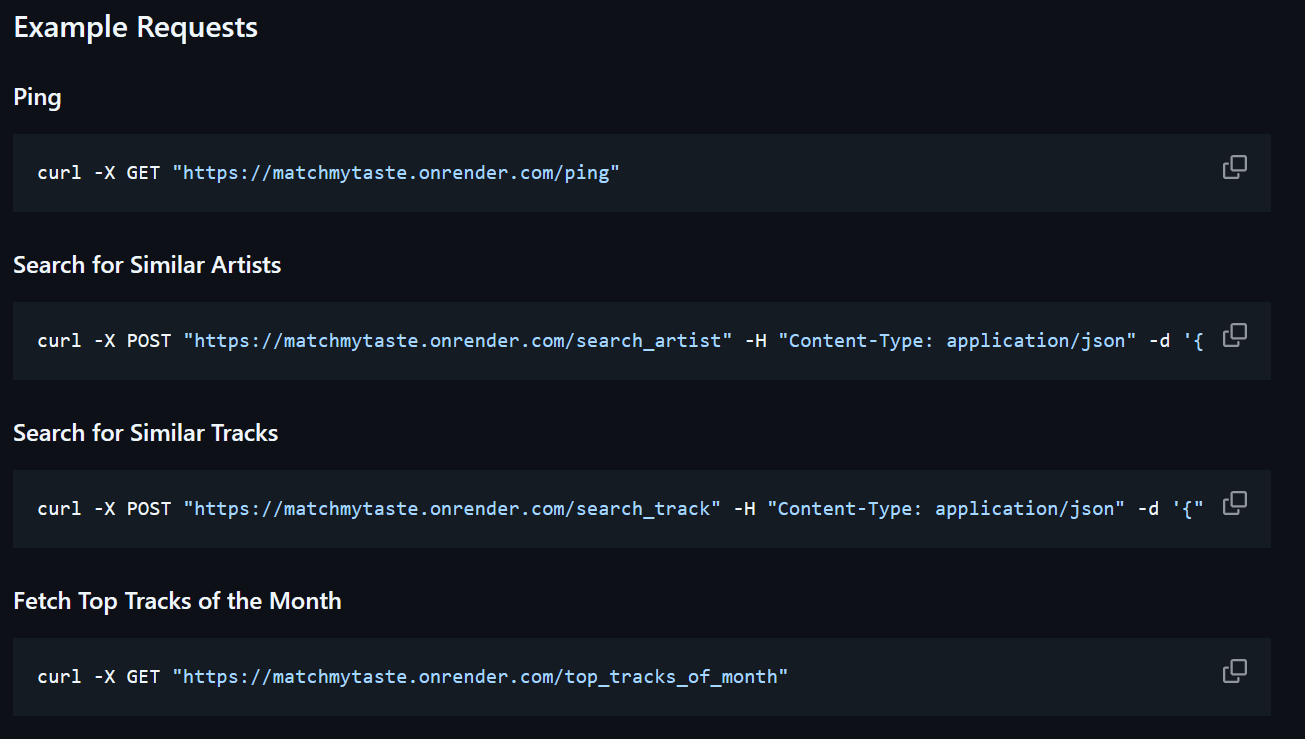
MatchMyTaste API is a FastAPI-based music recommendation service that integrates with the Spotify API to help users discover similar artists, tracks, and monthly top songs. It exposes a simple REST interface that can be consumed directly via HTTP requests or through a companion web interface, making music discovery programmable and accessible.
00
problem
Music discovery on streaming platforms is often limited by algorithmic recommendations that lack transparency and flexibility. Users typically rely on passive suggestions without the ability to programmatically explore relationships between artists or tracks. Additionally, there is no simple way for developers to access structured similarity-based music data without building their own integration with Spotify’s ecosystem.
solution
MatchMyTaste API provides a lightweight abstraction over the Spotify API, exposing curated endpoints for music similarity and trend discovery. Built with FastAPI, it offers endpoints for: - finding similar artists based on a query - retrieving similar tracks with metadata and Spotify links - fetching top tracks of the month using popularity signals - health checking via a simple ping endpoint The service is designed to be both developer-friendly and production-ready, with clear request/response structures and support for both hosted and local deployments. It can be consumed via raw HTTP requests, integrated into applications, or accessed through a web UI for non-technical users. By wrapping Spotify’s data into a structured API, MatchMyTaste transforms music discovery into something programmable, extensible, and easy to embed into other systems.
This project started from a simple curiosity: music recommendation systems feel powerful, but they’re locked behind black boxes.
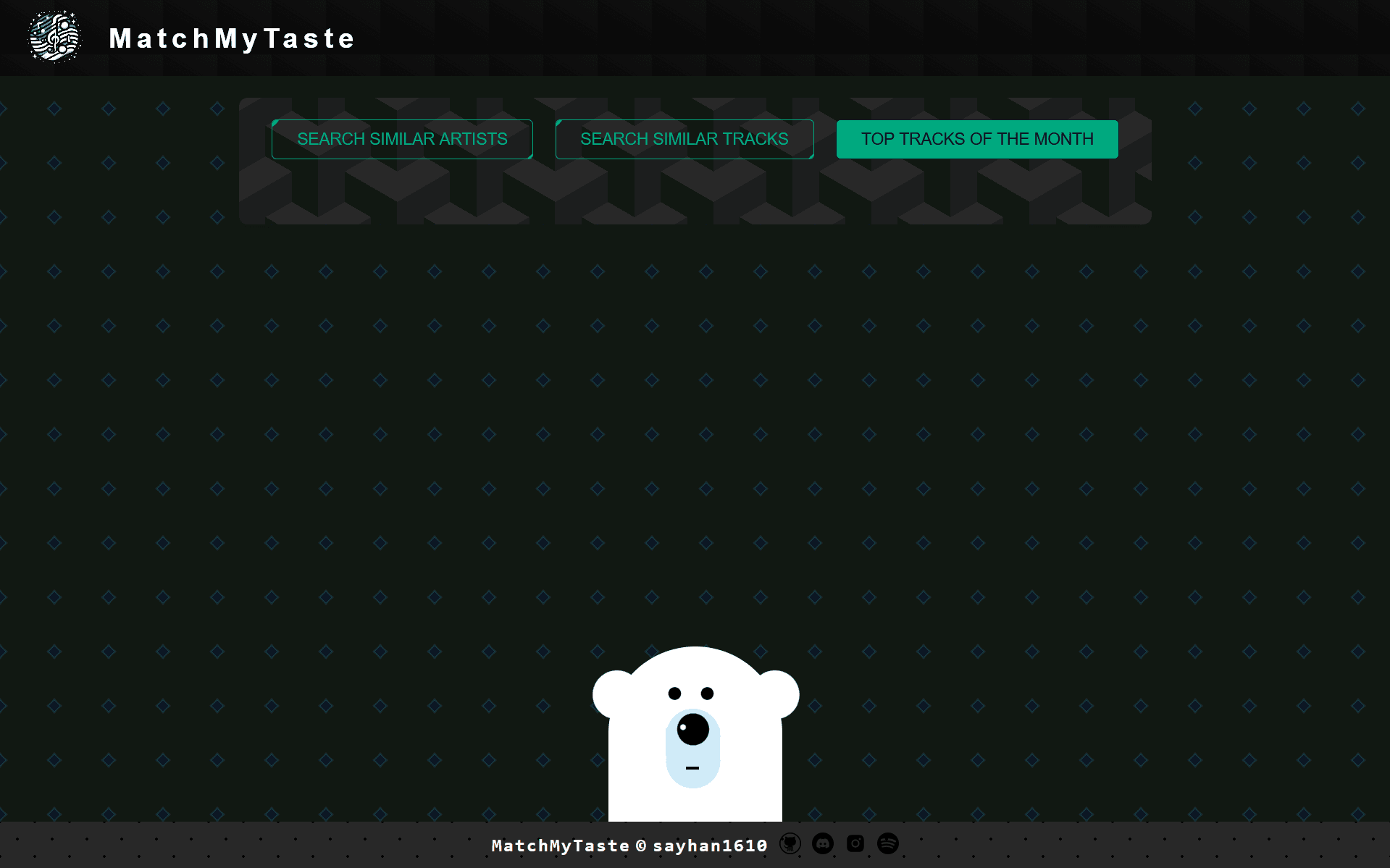
I wanted to see what it would look like if music taste could be queried directly - like asking a system, “If I like this artist, what’s the nearest sonic universe I can explore?”
So I built MatchMyTaste as a bridge between Spotify’s massive dataset and something more accessible: clean API endpoints that return structured musical relationships instead of just algorithmic playlists.
FastAPI became the backbone because it kept everything fast, simple, and expressive. Spotify provided the data layer, and the rest was about shaping it into something usable - something that could be plugged into other apps, websites, or experiments.
Over time, it evolved from a small experiment into a proper service with multiple access points: raw API, local deployment, and a web interface. It stopped being just a “project using Spotify” and became a tool for exploring taste itself - like a search engine for musical adjacency.
year
2023
timeframe
16 days
tools
Framer
category
Personal Project
01

02

03